Games · News
Google wants anyone with a game idea to be able to build it
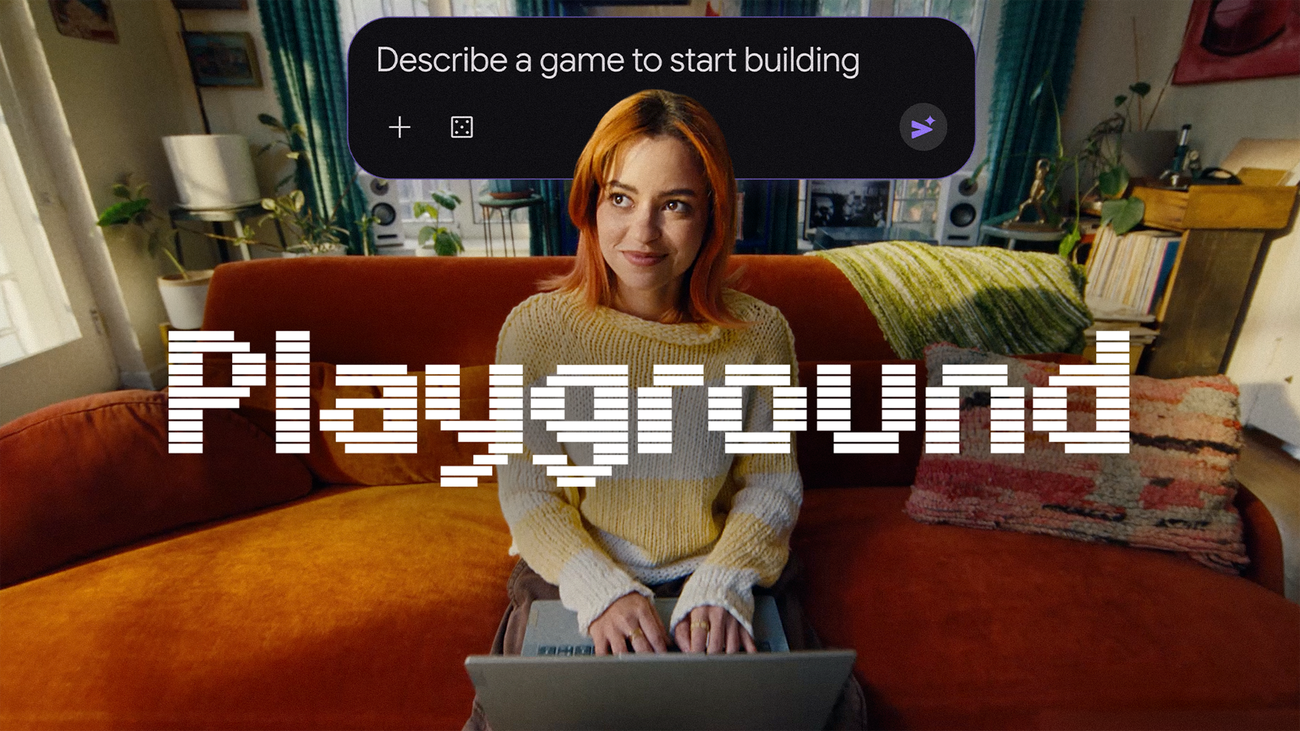
Playground turns everyday descriptions into playable games, giving people a way to create, experiment and share without learning to code.
Reporting updated Oct 8, 2026
THE TAKEAWAY
Google has launched Playground, an experimental AI game creation platform that lets anyone with an idea start building something playable. The goal is to make game creation as approachable as describing what you want to play.
WHAT HAPPENED
Imagine having an idea for a racing game where the roads change every lap, or a fantasy adventure with a world that grows as players explore it. Normally, turning that idea into something playable requires programming, art, game design and a development engine.
Google wants to make the first step much simpler.
Launched October 7, Playground lets creators describe their ideas in ordinary language and immediately begin building a game. Users can start from scratch, modify existing templates, or let the platform guide them through their first creation.
The experience remains conversational throughout development. Creators can change physics, rewrite gameplay rules, adjust characters or rebuild environments by describing what they want. Rather than stopping at a generated prototype, Playground encourages an ongoing process of playing, changing and improving.
Finished games run directly in a browser on computers and phones. Creators can share a private link or publish to Playground's Explore gallery, where other players can discover, rate and play their work.
Google is launching Playground in the United States for adults 18 and older, with free creation access and higher usage allowances through Google AI subscriptions.
WHY IT MATTERS
The most interesting part of Playground isn't that AI can generate a game. It's what happens when a person can begin designing one without spending months learning the tools.
A student with a clever puzzle idea, an artist who imagines a particular world, or a lifelong gamer who has always wanted to change a favorite mechanic can now attempt to make that idea playable.
That creates room for experimentation from people who might never have considered themselves game developers.
Google is also building an audience into the platform. A finished game doesn't need to sit unnoticed on someone's computer. It can become something friends play, strangers discover and creators continue improving based on feedback.
Playground is still an experiment, and the quality of individual games will vary. But it introduces a compelling possibility: game creation could become a pastime in its own right, alongside playing games.
WHAT CREATORS CAN DO
Build through conversation
Describe a game, its mechanics, characters and visual style without writing code.
Keep experimenting
Play the result, identify what needs work and request changes.
Create 2D or 3D experiences
Develop browser-based games across different genres, with multiplayer available in select experiences.
Find an audience
Publish games to a community gallery with ratings, creator profiles and player activity.
The first version of a game doesn't have to be the finished idea. It can be the beginning of a conversation between the creator and something playable.
VEYR ANGLE
Some of the most interesting game ideas come from people who have spent years playing games but have never made one.
Playground gives those people a way to experiment with their instincts. They can finally find out whether that unusual mechanic, strange world or personal story is actually fun to play.
The exciting question isn't how many games AI can generate. It's what unexpected games people will invent when the tools stop standing between them and their imagination.