Creators · News
Tokens: The AI creator revolution has a pricing problem
AI is supposed to give individuals the production power of a studio. But as creative workflows shift toward metered agents, tokens and generation credits, the people with the least capital risk being priced out.
Reporting updated Sep 30, 2026

THE TAKEAWAY
The promise of creative AI is that one filmmaker, game developer, student creator or tiny team can attempt work that once required a studio. But that only works if the cost of using the intelligence falls along with the cost of production. The tools are becoming astonishingly capable. They’re also becoming increasingly metered. For independent creators, students and small teams, that creates a new version of an old problem: you may no longer need 50 employees to make something ambitious, but you still need enough money to keep the machines thinking.
The dream is getting real
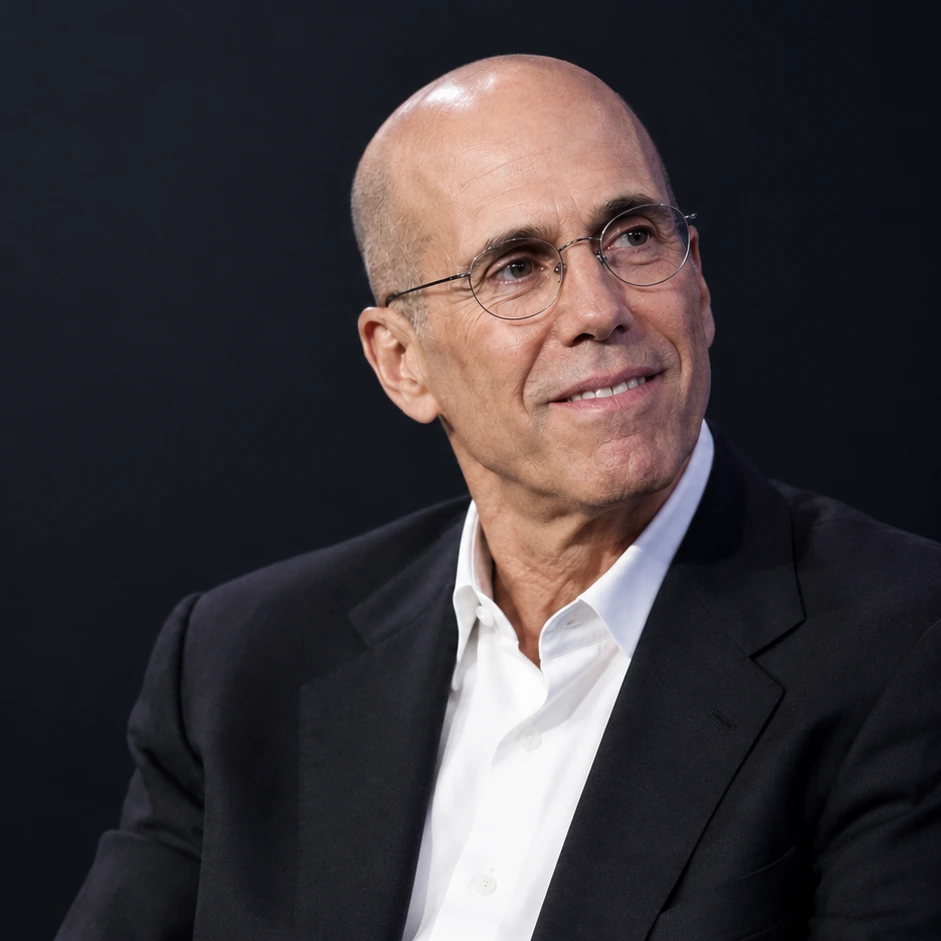
Jeffrey Katzenberg recently made an optimistic case for creative AI: production tools could become cheap and accessible enough that far more people can make films, animation and other ambitious work.
We’re starting to see that future. Agents can write code, operate Blender, assemble edits, generate performances and connect entire production pipelines. One person increasingly has access to capabilities that once required departments.
But there’s a catch. The creator still has to pay for every turn of the machine.
Katzenberg’s vision works only if this production power becomes affordable for individuals, student creators and tiny teams—not merely cheaper than hiring a traditional studio.
The underlying economics are improving fast. Research from Epoch AI found the price of reaching a fixed level of AI capability has been falling at an extraordinary rate. Model providers have also introduced cheaper tiers, caching and more efficient systems.
But creators are consuming far more AI than they did two years ago. A workflow used to mean asking a chatbot for ideas. Now it can mean giving an agent a codebase, browser, Blender project and production goal, then letting it work for hours.
Video, voice and image generation add their own usage meters. So while the cost per token or per generation may fall, the amount of compute required to make something truly ambitious can grow even faster.
Iteration is where the cost bites
Creative work is built on iteration.
A filmmaker doesn’t know which version works until she sees it. A student creator may need dozens of experiments just to discover what is possible. A designer may explore dozens of characters. A developer may try 30 versions of a mechanic before one clicks.
If the gate just moves to compute, we haven't democratized much
With usage-based pricing, each experiment has a cost. A funded company can treat inference like cloud infrastructure and absorb failed attempts into a production budget. An individual creator or student eventually has to watch the meter.
That risks turning experimentation itself into a privilege.
A well-funded studio can tell an agent, “Keep going.” An independent creator or student eventually has to say, “Stop.”
The most exciting AI future isn’t a giant studio making the same movie with fewer people. It’s someone we’ve never heard of making something that giant studio would never have funded.
A filmmaker working alone. A student creator building a first serious project. Three animators attempting a feature. A five-person game team competing creatively with a company of 500.
If AI makes that technically possible but financially impractical, we haven’t removed the gate. We’ve moved it.
The old gate was access to employees, equipment and capital. The new gate could become access to compute.
Something has to give. Models will become more efficient. Smaller models can handle routine work while expensive frontier models tackle the hardest problems. Caching and local models can reduce repeated costs.
But pricing matters too. A predictable creator subscription is fundamentally different from watching a meter run while experimenting. AI companies could also offer generous creator tiers—large but bounded pools of inference designed for individual filmmakers, student creators, artists and developers rather than enterprise deployment.
The industry already subsidizes certain communities because their work creates long-term value. Creators—and especially the next generation of creators—should be one of them.
We haven’t removed the gate. We’ve moved it.
VEYR Editorial
What has to change
The breakthrough isn’t when one person can technically make a movie or game with AI.
It’s when a filmmaker, game developer, student creator or tiny team can afford to keep trying until it’s good.
Creative AI is rapidly removing barriers around labor, technical knowledge and production tools. The next barrier may simply be how long you can afford to keep the meter running.
For the creator revolution to actually belong to creators, something has to give: tokens have to get cheaper, agents have to get more efficient, pricing has to become more predictable—or all three.
Because the future where anyone can build something extraordinary only works if anyone can afford to try.