Film · Breakthrough Workflows
Adobe wants AI filmmaking to work across the scene—not just one generated shot
Four research demonstrations at Adobe MAX explore a different kind of creative control: consistent edits, interactive performances, responsive cameras and precise timing.
Reporting updated Nov 17, 2026

THE TAKEAWAY
At Adobe MAX 2026, Adobe Research demonstrated four experimental video tools aimed at problems filmmakers face after the first shot exists. Rather than asking AI to generate another isolated clip, the projects explore how a director might carry an edit across multiple shots, develop a character through conversation, redirect a scene while it plays or specify exactly when an action should happen. These are research demonstrations, not announced shipping features.
WHAT HAPPENED
Adobe presented ten experimental projects during its November 11 MAX Sneaks session, including four that directly address filmmaking and animation.
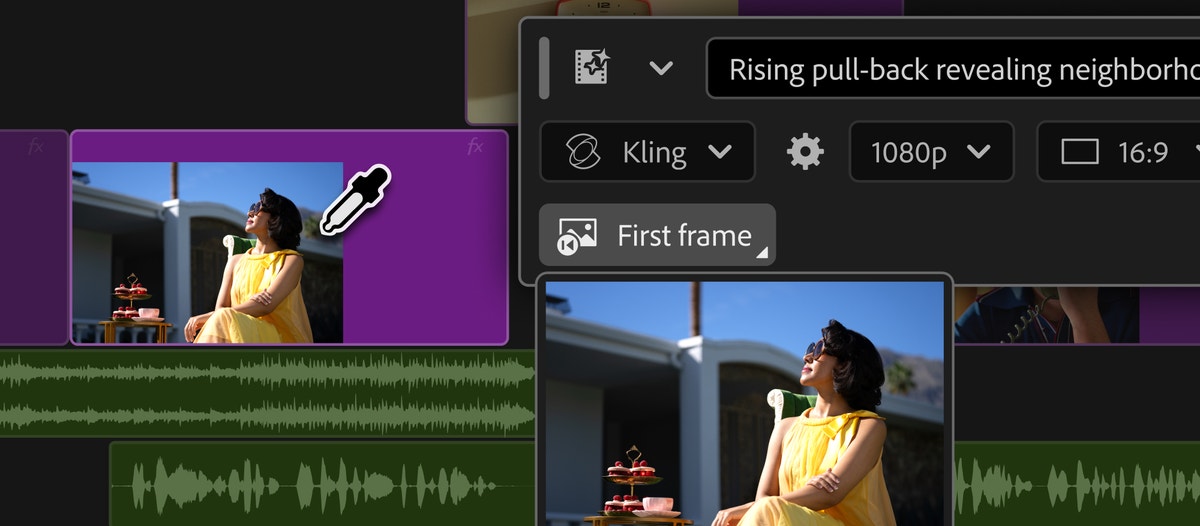
Project Scene Sweep tackles continuity across a sequence. A creator can make a change involving a character, location or scene and have the system apply that decision across different cuts and camera angles. The goal is to avoid manually repeating an edit shot by shot.
Project Screen Test takes a different approach to character development. Creators define a fictional character's appearance, voice and personality, then converse with that character to explore its responses and behavior. It treats dialogue as a creative-development tool rather than simply a final output.
Project Live Set explores real-time direction. Instead of generating a completed video and starting over when something feels wrong, a creator can change a subject, reshape the environment or redirect the camera while the scene continues.
Project On Cue addresses timing. An artist can draw a timing signal or derive one from existing music or video, then use it to control when an event occurs in generated footage.
WHY IT MATTERS
Making one compelling AI-generated shot is increasingly accessible. Making ten shots feel as though they belong to the same film remains much harder.
A filmmaker needs continuity in character appearance, geography, performance and lighting. The director also needs control over pacing: when a character turns, when a light flashes, when a camera moves and how one shot connects to the next.
Adobe's experiments address pieces of that larger challenge.
Scene Sweep targets the repeated work of maintaining consistency. Screen Test explores performance and character development before a scene is finished. Live Set moves toward interactive staging. On Cue provides a more deliberate relationship between action and time.
The demonstrations do not establish how reliably these tools handle complicated productions. Adobe has not promised commercial release dates or full product availability for the four projects.
Their significance is the direction of the research: the creative process becomes less about requesting a finished result and more about manipulating decisions inside a developing sequence.
Reader card
Scene Sweep: Carry consistent changes across shots and angles.
Screen Test: Develop a fictional character through interactive conversation.
Live Set: Adjust subjects, environments and cameras as a scene plays.
On Cue: Direct the timing of visual actions using editable signals.
VEYR ANGLE
The next generation of AI filmmaking tools will be judged by how much creative control survives from one shot to the next.
Adobe's MAX Sneaks illustrate four possible ways to give that control back to artists: continuity, character interaction, live direction and timing.
For working filmmakers, the most important development would be seeing those ideas become dependable tools inside actual editorial pipelines. Until then, these projects are an ambitious preview of what Adobe Research is trying to make possible.