
Tools · The Signal
Peter Yang built the Golden Gate Bridge with AI-generated code
Peter Yang used Claude Opus 5.5 to create a recognizable 3D scene of the Golden Gate Bridge entirely through code. In his own experiments, he found the model competitive with GPT-6 Astra for building 3D environments.
Reporting updated Sep 23, 2026
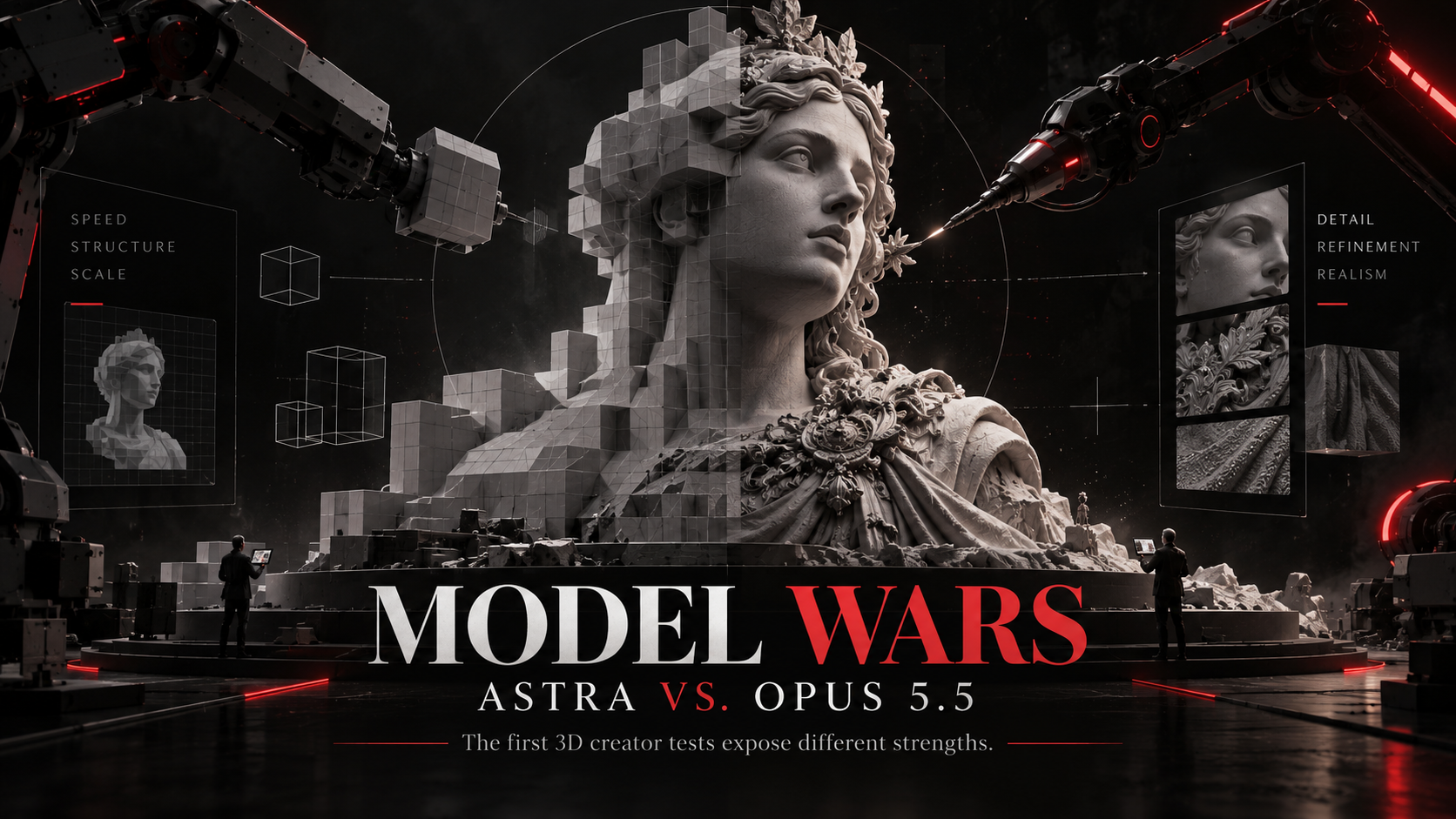
Peter Yang used Claude Opus 5.5 to create a recognizable 3D scene of the Golden Gate Bridge entirely through code. In his own experiments, he found the model competitive with GPT-6 Astra for building 3D environments.
What Happened
The Golden Gate Bridge is a challenging subject for a 3D experiment. Its towers, suspension cables, roadway and surrounding environment need to work together for the scene to feel recognizable. Peter Yang decided to build it using AI-generated code. In a demonstration shared on X, Yang says Claude Opus 5.5 generated the scene without traditional manual modeling. He also compared the result with his experiences using GPT-6 Astra, describing the two models as similarly capable for this type of work. It's a creator's assessment rather than an independent benchmark, but the visual experiment makes the comparison interesting. Instead of asking whether AI can generate a recognizable image of a bridge, Yang is exploring whether it can construct a 3D environment through code.
Why It Matters
For a game developer or filmmaker, a coded 3D environment can offer possibilities beyond a single finished image. The creator may be able to move the camera, change geometry or revise the scene without rebuilding the entire composition. How reliably those revisions work is the next question.
VEYR Angle
The value of AI-generated 3D will increasingly depend on whether creators can keep working with the scene after the first impressive result. Yang's bridge provides a recognizable place to begin that experiment.