Games · News
Meet Jev: The AI That Decides What Happens Next
Most AI tools are built to make something: text, images, video, code or 3D. Jev is built to choose. That difference could make it useful inside games and creative pipelines where software needs a fast answer about what should happen next.
Reporting updated Sep 26, 2026
THE TAKEAWAY
Most AI tools are built to make something: text, images, video, code or 3D. Jev is built to choose. That difference could make it useful inside games and creative pipelines where software needs a fast answer about what should happen next.
What Happened
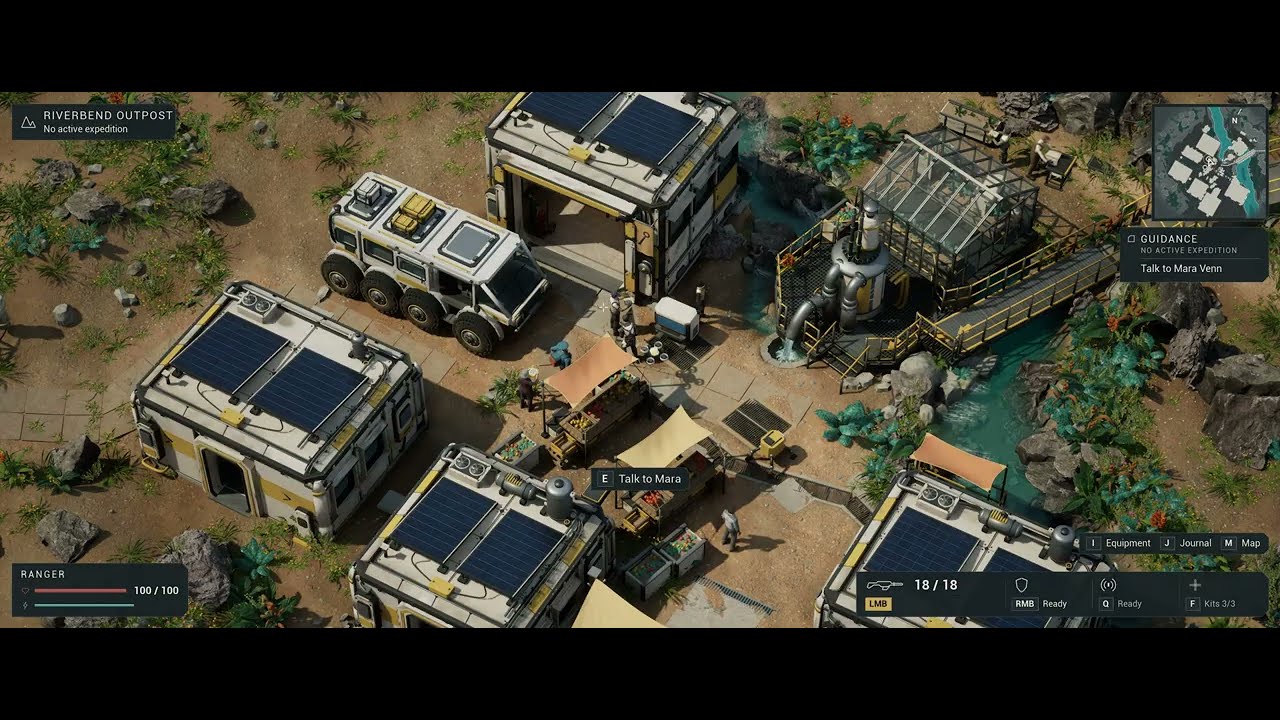
TypeSafe AI released Jev in early access as its first System One Model — a model designed for fast, structured decisions inside software rather than open-ended conversation. Instead of asking Jev to write a response, a developer gives it a situation and defines the choices the system is allowed to make. Jev might be asked: attack or retreat? Accept this shot or regenerate it? Send this task to Model A or Model B? Is this result good enough to continue? It returns a structured choice along with probabilities and confidence information that software can act on. TypeSafe has demonstrated Jev making decisions inside Doom. Jev is not looking at the game screen like a person. The game provides structured information about what is happening and a set of actions Jev can choose from. Then Jev repeatedly decides what to do next. TypeSafe says the demo can make roughly ten queries per second. The company also makes an important point: a conventional purpose-built Doom bot could play better. That is not really the experiment. The interesting part is that an AI model can sit inside a real-time software loop and repeatedly make constrained decisions fast enough for the experience to keep moving. That gives Jev a very different role from models like Astra, Opus, Seedance or an image generator. Those models make things. Jev potentially helps decide what to do with those things next.
Why It Matters
Games already contain thousands of decisions. An enemy might need to decide whether to attack, defend, retreat, flank, use an ability, change targets or call for help. A squad may need to choose a priority. A director system may decide whether the player needs more pressure or a chance to recover. A simulation might contain hundreds of characters making small choices continuously. Traditionally, developers handle this with behavior trees, utility systems and hand-authored rules. Those systems are not going away. In many situations they will remain faster, cheaper and more predictable than an AI model. Jev becomes interesting when the decision is fuzzy enough that writing every rule becomes difficult, while the actions still need to remain tightly controlled by the game. The developer defines what is allowed. Jev chooses between those options. Film and animation creators have a different opportunity. Jev probably is not going to make the shot. Seedance, Higgsfield or another generative model would do that. But imagine a production pipeline generating several versions of a shot. Something still has to decide: Does this take match the requested camera direction? Is the character consistent enough? Should we keep this version or regenerate it? Which model should handle the next step? Is the confidence low enough that a human should review it? That could become Jev's role: not filmmaker, not image generator, but decision layer. A modern AI creator may eventually use one model for images, another for video, another for code, another for 3D, another for voices and another for cleanup. The problem is no longer simply “Can AI generate this?” It becomes “Which tool should do the next job? Did the previous step succeed? Should we retry? Which result should continue down the pipeline? When should a human intervene?” Those decisions can happen hundreds or thousands of times during an automated workflow. Using a large reasoning model for every one of them could be unnecessarily slow and expensive. A smaller decision-focused model could potentially handle that layer.
VEYR Angle
The most interesting way to think about Jev is simple: generative AI creates possibilities; Jev chooses between them. Imagine an AI game-development system. A larger model builds an encounter. A 3D model generates the characters. Another system creates animations. Then Jev handles repeated tactical decisions once the encounter begins. Or imagine an AI filmmaking pipeline. Seedance produces four shots. Jev evaluates a bounded set of criteria. Three fail. One advances to the next production step. A human only gets involved when the system is not confident enough to decide. That is a very different model of AI creation from the single-prompt workflows we have become used to. Jev is still early, and TypeSafe's performance comparisons are TypeSafe's own measurements. The company acknowledges that its largest reported speed and cost improvements are likely toward the high end of what users should expect. But the idea behind Jev is worth watching. AI creation is moving away from one giant model doing everything. Instead, we are beginning to see systems made from specialized models and tools. Some create. Some reason. Some operate software. And increasingly, something needs to decide what happens next. Jev is an early example of an AI designed specifically for that job. That may ultimately make it more useful to creators than another model that simply generates more content.