Tools · Model Watch
Gemini 4 Hydrogen brings a faster AI worker into the creative development pipeline
Google's new model is designed to write, test and verify work alongside its larger reasoning models. A playable browser-game experiment shows what that could mean for creators.
Reporting updated Nov 13, 2026

THE TAKEAWAY
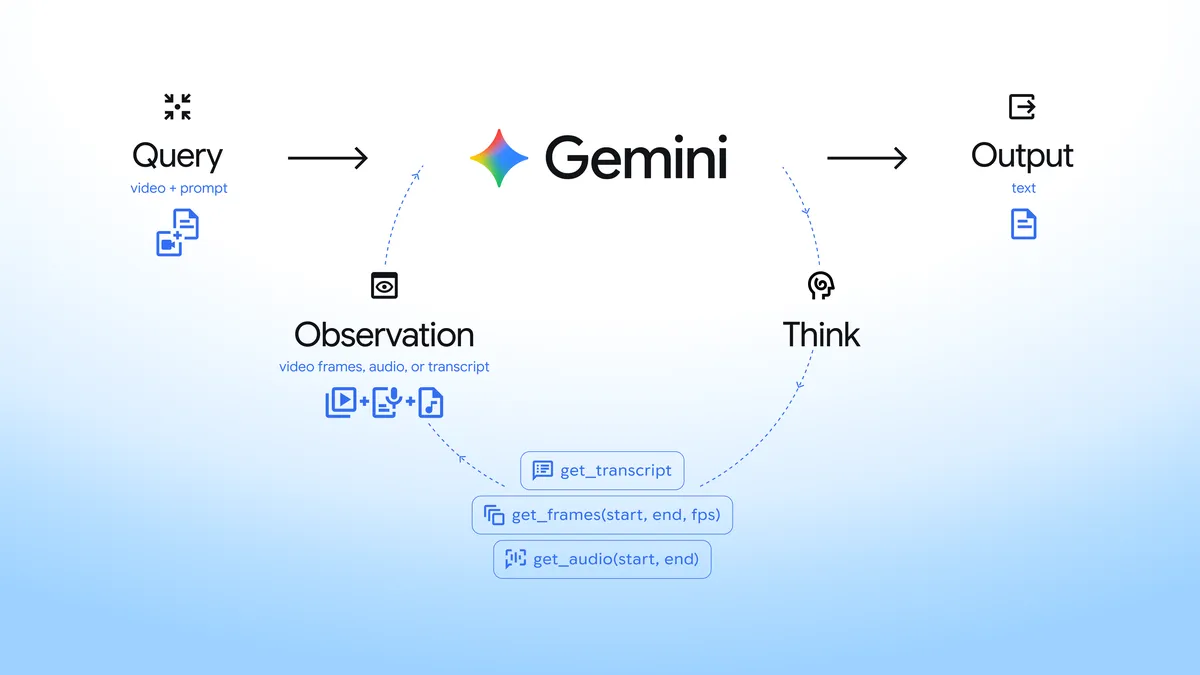
Google introduced Gemini 4 Hydrogen on November 12 as a fast execution model for coding and multi-agent workflows. Rather than asking one powerful model to handle everything, Google's Antigravity Orchestrator can use Gemini 4 Carbon for complex decisions while Hydrogen handles implementation, testing and verification. For creators, the promise is faster iteration without requiring frontier-level reasoning for every routine task.
WHAT HAPPENED
Hydrogen joins Google's Gemini 4 family with a one-million-token context window, multimodal inputs and four thinking levels. API pricing starts at $1.50 per million input tokens and $7.50 per million output tokens.
Google says its Carbon/Hydrogen orchestration achieved near-Carbon results on Terminal-Bench 4.0 while using 24% less quota and completing tasks 19% faster. Those are company-reported results.
A more tangible example comes from developer Adam Holter, who tested Hydrogen Extra through Antigravity CLI by asking it to build a browser game combining tower defense, survivor combat and town-building.
The resulting game launched, allowed building placement, completed its first enemy wave and entered a second. Later gameplay balance and progression were not established, but the experiment demonstrated a functioning prototype.
WHY IT MATTERS
AI can produce an impressive game prototype quickly. Making it usable requires considerably more work: fixing controls, checking collisions, refining interfaces and testing gameplay.
Those tasks do not always require the most powerful reasoning model.
Hydrogen is designed to handle that production work while larger models concentrate on difficult decisions. If the approach proves reliable, creators could spend more time directing and evaluating results rather than managing every implementation step.
Holter's experiment also illustrates the limitations. A game that successfully runs two waves is promising, but it is not necessarily balanced, polished or entertaining.
Four things creators should know
Agent collaboration
Faster models implement and test while stronger models handle complex planning.
One-million-token context
Supports substantial codebases and project materials.
Adjustable reasoning
Four thinking levels balance speed and effort.
Creator evidence
Holter's browser game provides an inspectable result, though not a finished game.
VEYR ANGLE
Hydrogen's significance is not simply speed. It points toward creative workflows where specialized AI agents collaborate throughout development.
For game creators, the meaningful test will be whether that collaboration produces better finished experiences—not just faster prototypes.
Holter's playable experiment is an encouraging starting point. The next question is how consistently Hydrogen can help creators build, repair and improve a project through repeated iterations.