Games · From the Field
A free AI driving demo became so popular its four-person studio needed a bank loan
Easy Fox's voice-controlled driving game lets players coach an unpredictable little sister. The studio says its free demo now costs more than $1,000 a day in AI services.
Reporting updated Oct 13, 2026
THE TAKEAWAY
The four-person studio behind Teach My Little Sister How To Drive says its free Steam demo now costs more than $1,000 per day in AI services after a twentyfold increase in players. The team took out a bank loan to keep it running and is exploring local models to make the game more sustainable.
WHAT HAPPENED
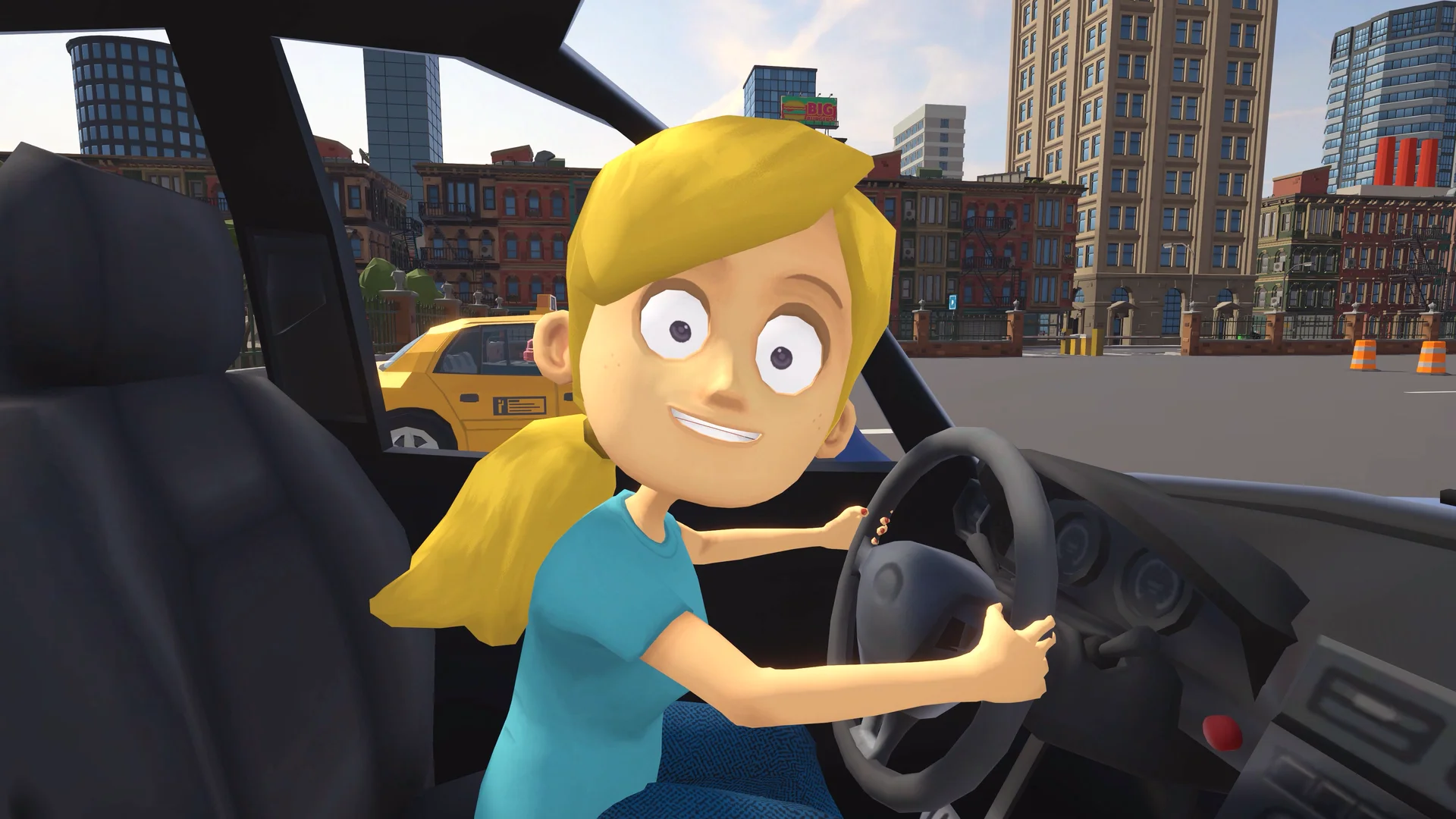
You're sitting in the passenger seat. Your little sister has the wheel, the road ahead looks dangerous, and the only way to help her is to talk. In Easy Fox's Teach My Little Sister How To Drive, players give spoken instructions to an AI-controlled driver who responds in conversation and tries to follow their directions.
The free Steam demo has found a much bigger audience than its four-person team expected. In an October 7 developer update, Easy Fox said the number of demo players had grown more than twentyfold over the preceding month. The studio reported that AI service spending had passed $1,000 a day and said it had borrowed money to keep the demo available.
The cost is not just a number on a bill. The game was originally designed to use Google's Gemini for the sister's dialogue, with OpenAI models available as a fallback. As demand surged, Gemini usage limits forced the developers to rely more heavily on the fallback, and players noticed long, unnatural replies and occasional incorrect commands.
Easy Fox is trying to restore its preferred service, improve fallback conversations and investigate local models for players with capable GPUs. For the eventual paid release, the studio says it intends to include expected AI usage in the purchase price rather than bill players separately for tokens. It has not announced a decision to close the demo.
WHY IT MATTERS
Most indie developers want more people to try their game. Easy Fox has discovered the strange arithmetic of a game that pays for outside AI processing every time someone plays. The demo brings attention and feedback, but its growing audience also brings a growing operating bill.
That creates a design challenge as much as a business problem. The sister's voice and responses are the game. When service limits push the experience onto a different model, the character may speak differently or misunderstand an instruction. Infrastructure choices become part of the player's experience.
Easy Fox's figures are developer-reported; the underlying invoices have not been independently audited. Even so, its update offers a rare, specific view of the tradeoffs facing small teams building live AI into gameplay rather than using it only during production.
THE DEMO'S SURPRISE PROBLEM
The game
Players coach an AI-driven sister by voice while she navigates hazardous roads, making conversation part of the gameplay.
Demand
Easy Fox reports more than twentyfold growth in demo players over a month, far beyond its early expectations.
The bill
The studio reports AI service spending above $1,000 a day and says it borrowed money to keep the free demo operating.
The response
The team is improving fallback dialogue, exploring local models and planning to price the eventual game around continued AI use.
“We are currently spending over $1,000 per day on AI services for the demo.” — Easy Fox, October 7 Steam update
VEYR ANGLE
This is the kind of problem that makes AI-native games both exciting and difficult. A little sister who can respond to what you say is more interesting than a character with a fixed list of dialogue choices. But every spontaneous exchange has a cost.
The game's success makes the lesson impossible to ignore: when AI is part of the gameplay, creators have to design the experience and the economics together.