Film · News
A filmmaker asks what to cut. This AI assistant can make the edit.
Reverie Movies has introduced Kubrick, a conversational filmmaking assistant that can review scenes, reorganize shots and help creators turn generated footage into a finished film.
Reporting updated Oct 8, 2026
THE TAKEAWAY
Independent developer Justin Crosbie has launched Kubrick, an AI filmmaking assistant built directly into Reverie Movies. Rather than focusing only on generating new video, Kubrick helps creators organize, revise and complete the films they are already making.
WHAT HAPPENED
Imagine assembling a short film from dozens of AI-generated clips.
You have your characters, locations and individual scenes. Some shots look beautiful. Others run too long, interrupt the pacing or don't quite connect with what comes next.
Now imagine being able to ask an assistant to review the entire project, identify what needs work and make the requested changes.
That's the experience Justin Crosbie is building with Reverie Movies.
Crosbie, an independent software developer based in Brisbane, Australia, created Reverie as a filmmaking environment where people can organize stories into scenes, build storyboards and edit generated footage on a timeline.
On October 7, he introduced Kubrick, a conversational assistant that works inside that environment.
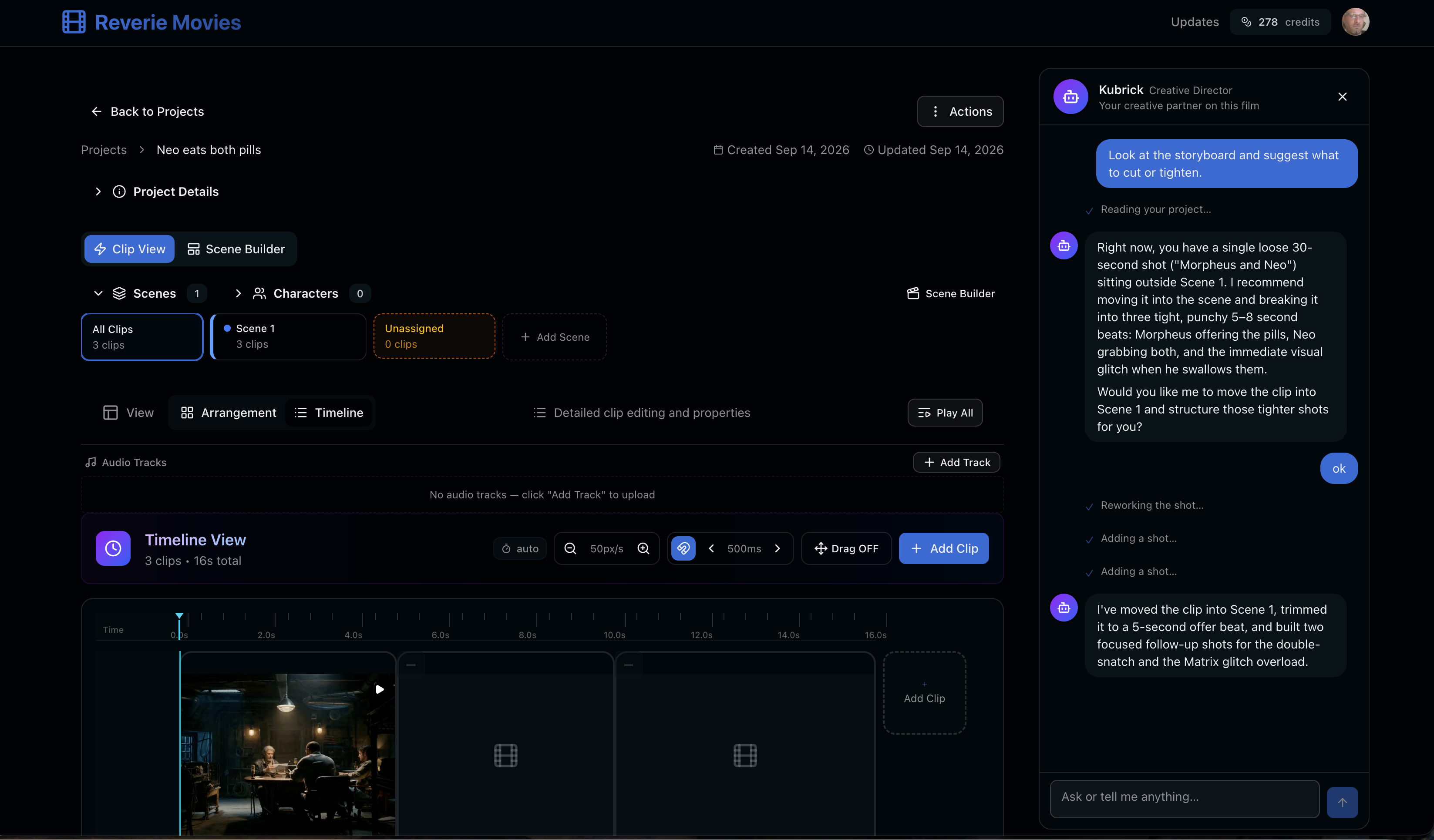
A creator can ask Kubrick to review a storyboard and suggest changes. If the creator agrees, the assistant can rearrange shots, trim clips and add new scenes.
It can also prepare and generate additional video, placing the resulting clips into the existing project.
Before spending credits on generation, Kubrick displays the expected cost. Creators can also step in at any time and make their own adjustments.
The feature is available now to Reverie users in an early-access product. Its specific underlying AI models have not been publicly identified.
WHY IT MATTERS
AI filmmaking has made generating imagery remarkably accessible. But making a complete film still requires hundreds of decisions.
A filmmaker needs to decide which shots belong together, where a scene should end, whether a character's performance works and when an image needs to be replaced.
Those decisions shape the experience of watching the film.
Reverie's approach is interesting because its assistant has access to the project's structure. It can work with existing scenes and editing decisions rather than treating every prompt as an isolated request.
The creator remains responsible for the story and can inspect or modify the assistant's changes.
For a filmmaker working alone, that could mean spending less time on repetitive editing operations and more time making the choices that give the film its personality.
The company's current release demonstrates an intended workflow, although the full quality and reliability of its editing decisions still depend on practical use.
HOW KUBRICK HELPS FINISH A FILM
Review the story
Examine scenes and clips, then suggest improvements to pacing and structure.
Edit existing footage
Trim, rearrange or reposition shots without leaving the project.
Create missing moments
Prepare additional shots and generate footage where the story needs it.
Complete the production
Continue refining manually, then export the assembled film.
Generating the shot is only part of filmmaking. Deciding whether it belongs in the movie is where the story takes shape.
VEYR ANGLE
There's something appealing about a filmmaking assistant that begins by asking what needs to change rather than offering to generate another spectacular image.
The filmmaker may already have the performances, locations and moments they need. The real work is putting those pieces together.
Crosbie is building for that part of the creative process.
Kubrick won't replace a filmmaker's instincts, but an assistant that understands the timeline and can carry out specific editorial decisions could make finishing a film considerably more approachable for an individual creator.